
 By Cyril Kimbi and Keng Elson
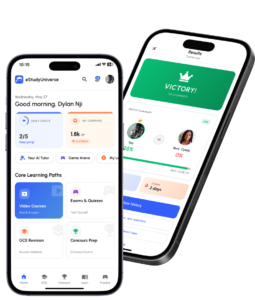
Medical concours is one of the most competitive paths after GCE A Level in Cameroon. Starting preparation immediately after results keeps your science knowledge active. eStudyUniverse is a Cameroon-focused GCE and concours preparation platform offering free past papers, study guides, and a mobile app with AI tutoring.
The 2026 GCE and TVEE results are out
Download the official Cameroon GCE Board lists of successful candidates. Open the PDF and search your surname in capital letters, or search your centre number.
Resitting? Free GCE past papers + AI Tutor in eStudyUniverse


Who Should Consider Medical Concours?
Candidates with strong A Level passes in Biology, Chemistry, and Physics or Mathematics should evaluate medical concours notices the week results release. Compare your grades to Faculty of Medicine and Biomedical Sciences requirements and parallel programmes.
Six-Month Preparation Timeline
Months one to two: complete five years of medical concours past papers at open-book pace. Months three to four: timed papers twice weekly. Months five to six: full mock days with strict timing and the answer review review. Download papers from the medical concours page.
Subject Focus Areas
Biology: human physiology, genetics, and ecology questions repeat often. Chemistry: organic mechanisms and stoichiometry. Physics or Maths: calculation speed under pressure. Use Biology A Level hub and Chemistry A Level hub to bridge GCE content into concours difficulty.
Medical Concours Timeline After A Level
Faculty of Medicine and Biomedical Sciences concours in Cameroon typically runs in August or September after GCE results. Registration windows are short. Prepare certified GCE copies, birth certificates, and passport photos before results day so you submit within 48 hours of opening.
Strong A Level grades in Biology and Chemistry are necessary but not sufficient. Concours papers test speed and breadth beyond GCE syllabus depth.
How to Start Medical Concours Revision
Week one after results: download five years of medical annales from the medical concours hub. Week two: sit one full timed paper under examination conditions. Week three onward: alternate Biology-heavy and Chemistry-heavy mocks with strict timing.
Pair concours practice with GCE A Level hubs for Biology and Chemistry to maintain syllabus depth while building examination speed.
Common Mistakes Medical Candidates Make
Waiting until registration closes to start revision. Studying only GCE depth without timed concours papers. Ignoring Physics and Mathematics components on combined science papers. Neglecting French medical terminology on bilingual examinations.
Faculties and Campus Options
Faculty of Medicine and Biomedical Sciences, CUSS, and related programmes publish separate notices. Map each faculty’s Biology-Chemistry-Physics weighting before choosing where to apply. Travel and housing costs differ sharply between Yaoundé, Douala, and regional campuses.
Study Group Structure for Medical Concours
Groups of three to five candidates should mark one timed paper together weekly. Rotate who leads Biology explanations. Share eStudyUniverse downloads on wifi so everyone practises offline during the week.
Health and Sleep During Intense Prep
August concours preparation runs in rainy season heat. Sleep seven hours, eat regular meals, and take one rest day per week to avoid burnout before examination day.
Science students should cross-link revision across Biology A Level, Physics A Level, Chemistry A Level, and Mathematics A Level hubs on eStudyUniverse.
Community and Mentorship
Join the eStudyUniverse WhatsApp community for verified study tips during results season. Avoid groups that share unverified grade lists. Use YouTube worked solutions to complement PDF practice when you cannot solve a question alone after marking.
Keng Elson co-founded eStudyUniverse from the MAFA Mathematics Competition tradition. Cyril Kimbi built the platform technology used by more than 10,000 Cameroonian students. Content follows our editorial standards.
How the Medical Concours Differs From A Level Biology
Candidates who scored well in A Level sciences often underperform on their first medical concours, and the reason is rarely knowledge. The two examinations reward different skills, and the transition has to be trained deliberately.
Speed replaces depth. A Level rewards a developed answer written at a measured pace. The concours asks a large number of short questions against a hard clock, where a question you could answer perfectly in four minutes is worth nothing if you had ninety seconds. Practising with a timer from the first week matters more than adding new content.
Breadth replaces selection. In A Level you could concentrate effort on topics likely to appear and still do well. Concours papers sample across the whole syllabus in Biology, Chemistry, Physics, and Mathematics, so the topic you skipped is as likely to appear as the one you mastered. Coverage beats mastery of favourites.
Precision replaces partial credit. Method marks rescue an imperfect A Level answer. In a multiple choice format there is no partial credit, and a small arithmetic slip costs the same as not knowing the topic. Accuracy under time pressure becomes a skill in its own right.
Ranking replaces passing. A Level asks whether you met a standard. The concours asks how you compare with everyone else sitting it for a fixed number of places. Your target is not a score but a position, which is why timed practice against the clock and against peers is the only realistic preparation.
Work through medical concours past questions under full examination conditions rather than reading them, and treat every untimed session as revision rather than preparation.
What the 2026 Science Results Mean for Medical Candidates
The 2026 Advanced Level statistics, released on 21 August 2026, carry a direct message for anyone preparing a medical concours file.
Chemistry, the subject that carries most weight in medical selection, returned a pass rate of 48.45 percent. Of 31,179 candidates who sat, 15,106 passed and 16,431 did not. Biology returned 59.07 percent from 25,568 candidates, and Physics 63.47 percent from 16,054. The overall Advanced Level pass rate was 61.78 percent, down from 79.39 percent in 2025.
The pool of admissible science candidates is smaller this year. Fewer candidates hold the science profile a medical faculty requires, which improves the odds for anyone who does hold it. If your Chemistry and Biology grades came through in 2026, your file is stronger relative to the field than the same grades would have been in 2025.
Chemistry is where medical ambitions were lost. More candidates failed Chemistry in 2026 than passed it. If Chemistry is the subject blocking your file, you are looking at the single largest obstacle in the 2026 cohort, and it is worth treating as a dedicated project rather than one subject among several.
Building the Concours Timetable Around the Weak Subject
Most candidates split preparation evenly across Biology, Chemistry, Physics, and Mathematics because that feels fair. It is not the best use of the months you have.
Start by sitting one full timed paper in each of the four subjects and mark them honestly. The subject where you lose the most marks per hour of revision invested is the one that should take the largest share of your week, and for most candidates in 2026 that will be Chemistry.
Give the weakest subject three sessions a week, the middle two subjects two sessions each, and your strongest subject one maintenance session. Reassess every four weeks with another timed paper. When the gap closes, rebalance.
Keep every subject alive. Dropping your strongest subject to rescue the weakest is the mistake that turns one weak area into two, and concours papers sample all of them.
Sit One Full Paper This Week
Whatever stage your preparation has reached, sit one complete concours paper under timed conditions before the week ends. Not a topic test and not a reading session, but a full paper against the clock with a score at the end.
It will be uncomfortable, and that is the point. The number it produces is your true starting position, and every plan built without it is built on an estimate. Candidates who take this baseline in the first week consistently allocate their months better than those who spend three months revising before they discover where they actually stand.
Frequently Asked Questions
When should I start medical concours prep?
Within weeks of A Level results for August or September examinations.
Which subjects matter for medical concours?
Biology and Chemistry are primary. Physics and Mathematics appear on many papers.
Are medical concours papers harder than GCE?
They are faster and broader. Use medical annales alongside GCE A Level revision.
Where do I download medical annales?
Free resources on the eStudyUniverse medical concours hub.
Can I prep medical concours while in Upper Sixth?
Some candidates split time, but GCE finals should remain the priority until June.
Does the app work offline for concours?
Yes. Download annales on wifi and practise offline during power cuts.
Author: Keng Elson, mathematics educator and co-founder of eStudyUniverse and MAFA. Content verified by the eStudyUniverse editorial team.
Related articles: Free GCE past questions hub | Cameroon concours hub | eStudyUniverse app | Complete concours guide | GCE results hub | Biology past questions | Physics past questions | Medical concours past questions
Start Your Next Chapter in the App
Used by 10,000-plus students in Cameroon. Download GCE and concours past papers, practise offline, and see your weak topics in the answer review before your next sitting.
Free download · Offline mode · AI Tutor · Practice Center