GCE A Level Chemistry Past Questions
GCEA LevelFree PDFChemistryStudent App


Organic, inorganic, and physical chemistry past papers for Upper Sixth
Download Chemistry Papers
A Level Papers 1, 2, 3
A Level Hub
All A Level subjects
GCE A Level Chemistry past questions are the most reliable way to prepare for Upper Sixth examinations in Cameroon. This hub covers the A Level Chemistry syllabus, paper structure, high-yield topics, and a revision method used by thousands of students on eStudyUniverse. Download free papers from the GCE Chemistry past questions page, browse all subjects on the free GCE past questions PDF hub, or return to all Cameroon GCE A Level past questions.
Cameroon GCE A Level Chemistry is essential for medical concours, engineering, pharmacy, and pure science programmes. Students searching for chemistry annales before the June session need more than a file list — they need syllabus depth, topic prioritisation, and a weekly past-paper rotation. The sections below give you that framework, written for the Cameroon GCE Board syllabus used in the Anglophone subsystem.
A Level Chemistry syllabus overview. The syllabus spans physical chemistry (atomic structure, bonding, energetics, equilibria, electrochemistry, reaction kinetics), inorganic chemistry (periodic trends, Group chemistry, transition metals), and organic chemistry (hydrocarbons, functional groups, mechanisms, polymers, biochemistry basics). Paper 1 tests multiple-choice breadth; Paper 2 tests structured theory; Paper 3 tests practical skills and data interpretation. Medical and engineering candidates must score strongly across all three.
Upper Sixth students in Buea, Bamenda, Limbe, Douala, and Yaoundé typically sit Chemistry alongside Biology, Physics, and Mathematics. The competition for medical school places means a C grade in Chemistry is rarely sufficient — aim for B or A through consistent past paper practice. eStudyUniverse stores Chemistry papers from 2010 with mark schemes where available, downloadable on wifi for offline revision during power cuts.
Who this hub is for. Form Six science students preparing for June GCE; private candidates resitting Chemistry; Lower Sixth students previewing the A Level jump from O Level; and concours candidates who need to refresh A Level Chemistry before medical or engineering entrance exams in August. If you are in Lower Sixth, start with O Level consolidation before attempting full A Level papers — use the GCE O Level hub first.
GCE A Level Chemistry Paper Structure
Paper 1 (Multiple Choice) — 40 questions in 1 hour 15 minutes. Tests factual recall and quick calculation across the full syllabus. Students lose marks on careless unit errors and confusing similar functional groups. Practise at least 10 recent Paper 1 scripts under timed conditions; mark immediately and log every wrong question by topic in Performance Analytics.
Paper 2 (Structured Questions) — Long-answer theory divided into sections on physical, inorganic, and organic chemistry. Questions often combine calculation with explanation (e.g. Hess’s law enthalpy cycles, equilibrium constants, organic mechanisms). Show working clearly; examiners award method marks. Use past papers from 2015 onward to see how multi-step organic synthesis questions are framed.
Paper 3 (Practical / Alternative to Practical) — Tests titration, gravimetric analysis, qualitative tests, and graph plotting. Know standard procedures: acid–base titration, redox titration (MnO₄⁻/Fe²⁺), test for cations and anions, and flame tests. If your school has limited lab time, study alternative-to-practical papers and practise identifying apparatus, errors, and safety steps from diagrams.
High-Yield Chemistry Topics for Cameroon GCE A Level
Physical chemistry. Mole concept and stoichiometry appear in almost every paper. Master enthalpy changes (formation, combustion, neutralisation), Hess’s law cycles, and Born–Haber diagrams. Equilibrium: Kc, Kp, Le Chatelier applications, and industrial processes (Haber, Contact). Electrochemistry: standard electrode potentials, cell diagrams, and electrolysis calculations. Kinetics: rate equations, order of reaction, and collision theory.
Inorganic chemistry. Periodic trends (atomic radius, ionisation energy, electronegativity) with explanations. Group 2 and Group 17 chemistry: reactions, solubility trends, disproportionation (chlorine in alkali). Transition metals: variable oxidation states, coloured ions, catalysis. Environmental chemistry links (ozone, greenhouse gases) appear in structured essays.
Organic chemistry. Nomenclature and isomerism (structural, geometric, optical). Reaction mechanisms: SN1/SN2, electrophilic addition to alkenes, nucleophilic substitution on halogenoalkanes. Functional groups: alcohols, aldehydes, ketones, carboxylic acids, esters, amines. Polymers and condensation vs addition polymerisation. Biochemistry touches: proteins, enzymes, DNA structure at A Level depth.
Link your revision to related science hubs: Physics A Level for energetics graphs, Biology A Level for biochemistry overlap, and Mathematics A Level for logarithmic and calculus-based kinetics questions.
How to Revise GCE A Level Chemistry with Past Papers
Use this five-step method each week from January through June:
- Topic audit. List syllabus sections and rate confidence 1–5. Prioritise organic mechanisms and physical calculations below 3.
- Timed Paper 1. One full multiple-choice paper per week. Target 30+ correct before exam day.
- Structured Paper 2. Attempt one section (physical OR inorganic OR organic) under timed conditions. Mark with official mark schemes.
- Practical Paper 3. Alternate weeks: real titration practice at school or alternative-to-practical past scripts at home.
- Error log. Record every lost mark by topic. Re-drill weak areas in the eStudyUniverse app Practice Center before moving to the next paper.
Rotate papers by year (2018, 2019, 2020, 2021, 2022, 2023) so you do not memorise answers. Pair evening theory revision with morning calculation drills — stoichiometry and equilibrium maths benefit from daily repetition.
Exam Day Strategy and Common Chemistry Mistakes
On Paper 1, flag difficult questions and return later — do not lose 3 minutes on one calculation. On Paper 2, read the full paper first and attempt your strongest section. Show state symbols in equations (s, l, g, aq). In organic questions, draw clear displayed formulae; examiners penalise ambiguous structures.
Common mistakes Cameroon students make: confusing Kc and Kp units; forgetting to convert cm³ to dm³ in titration maths; mixing up aldehyde and ketone test reagents (Tollens vs Fehling); incorrect curly arrows in mechanisms. Fix these with deliberate practice on Chemistry past papers with answers rather than re-reading textbooks passively.
If you are also preparing for medical concours, allocate 60% of science revision time to A Level Chemistry and Biology until GCE results are released, then shift toward concours timed papers in August.
Download GCE A Level Chemistry Past Questions
All Chemistry papers from 2010 onward are available free on eStudyUniverse. Download on wifi, then study offline in the app — essential when mobile data is expensive or power cuts interrupt evening revision.
What you get: Paper 1, 2, and 3 PDFs with mark schemes where available, topic-tagged questions in Practice Center, and AI Tutor help on mechanisms you cannot solve alone.
Start with the dedicated GCE Chemistry past questions download page. For a subject-wide view, use the GCE past questions hub. Read our blog guide How to Pass GCE Chemistry Cameroon for a month-by-month study plan.
Related subjects: Biology past questions | Physics past questions | Mathematics past questions
Month-by-Month Chemistry Revision Calendar
January–February: Complete syllabus audit. Re-learn weak O Level topics (mole concept, bonding, basic organic nomenclature). One Paper 1 per fortnight.
March–April: Intensive Paper 2 practice. Alternate physical and organic sections weekly. Attend all school practical sessions; write up titration results same day.
May: Full mock under exam conditions — Paper 1, 2, and 3 on separate days. Analyse mark scheme patterns from the last five years.
June (exam month): Light revision only. Review error log, sleep properly, and avoid new topics in the final 72 hours.
Pair this calendar with the How to Pass GCE Chemistry Cameroon blog for detailed strategies per paper. Download the app before exam week so offline papers work even if mobile data runs out during blackout periods common in the rainy season.
Concours crossover: Medical candidates should maintain 70% Chemistry/Biology focus until GCE ends, then switch to medical concours past questions. Engineering candidates should link Chemistry revision with Physics A Level and Mathematics A Level hubs for integrated numeracy practice.
How to Use A Level Chemistry Past Papers
Practise organic mechanisms, titration calculations, and Paper 3 practical skills under timed conditions. Mark with official guides after each attempt.
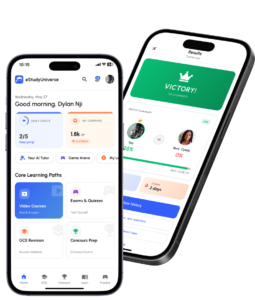
Get the Full Library in the eStudyUniverse App
Download the Student Companion App
GCE A Level Chemistry: Frequently Asked Questions
Where can I download GCE A Level Chemistry past questions in Cameroon?
Download free GCE A Level Chemistry past questions PDF on the Chemistry past questions page or in the eStudyUniverse app. Papers from 2010 onward cover Paper 1, 2, and 3.
Are GCE Chemistry past papers free?
Yes. Standard PDF downloads are free on eStudyUniverse. Premium app features (AI Tutor, advanced analytics) may require MoMo or Orange Money payment.
Do Chemistry past papers include answers?
Many years include marking guides or worked solutions where the GCE Board released them. Use mark schemes to score Paper 2 structured answers honestly.
Which Chemistry topics appear most on GCE A Level?
Organic mechanisms, mole calculations, equilibrium (Kc/Kp), electrochemistry, Group chemistry, and titration practicals appear every year. Prioritise these in revision.
Can I revise Chemistry offline on my phone?
Yes. Download papers on wifi in the eStudyUniverse app, then practise offline — essential during power cuts in Cameroon.