
 By Cyril Kimbi and Keng Elson
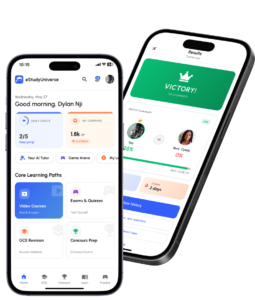
Upper Sixth ends with a decision: enter university now, chase a competitive concours place, or combine both strategically. eStudyUniverse is a Cameroon-focused GCE and concours preparation platform offering free past papers, study guides, and a mobile app with AI tutoring.
The 2026 GCE and TVEE results are out
Download the official Cameroon GCE Board lists of successful candidates. Open the PDF and search your surname in capital letters, or search your centre number.
Resitting? Free GCE past papers + AI Tutor in eStudyUniverse


University Path: Best For Whom?
University suits students who meet faculty cutoffs and want broad degree education first. Science students entering general degree programmes can still pivot toward professional schools later if they maintain strong GPA and science depth.
Concours Path: Best For Whom?
Concours suits candidates targeting specific institutions: Faculty of Medicine, ENSP, NAHPI, ENAM, IRIC, and others. These examinations are timed, competitive, and often require six to twelve months of dedicated past paper practice.
Decision Framework
Ask four questions: Do my grades meet concours minimums? Does my dream career require a specific institution? Can my family support full-time prep? Do I have a credible Plan B university option? Answer honestly before committing.
Explore the concours hub and complete guide for institution-specific requirements.
Sequencing: Which Should You Attempt First?
Choose university first if your grades meet faculty cutoffs and you want a broad degree before specialising. Choose concours first if your grades qualify for medical, engineering, or teacher training entrance and you accept the higher risk of competitive selection.
Many successful professionals attempt concours once while enrolled in a related university programme. Check whether your target faculty allows simultaneous preparation.
Financial and Family Considerations
Concours preparation often requires transport to examination centres in Yaoundé, Douala, or Buea. University admission requires registration fees, housing deposits, and textbooks. Map costs with your family before committing.
Backup Plans That Reduce Stress
Apply to at least one university programme as a safety net while preparing concours. Keep copies of every form submitted. Track deadlines in a shared family calendar.
Use the complete concours guide to compare ENSP, NAHPI, medical, and teacher training pathways side by side.
Teacher Training and HTTTC Pathways
HTTTC and related teacher training concours suit candidates strong in pedagogy and general knowledge. Science teachers need Mathematics or Biology depth. Read HTTTC-specific guides on eStudyUniverse alongside GCE resources.
Polytechnique and Engineering Tracks
ENSP Yaoundé, NAHPI Bamenda, and FET Buea each publish separate syllabi. Mathematics and Physics speed matter more than memorisation. Start ENSP annales within two weeks of A Level results if engineering is your goal.
Changing Your Mind Mid-Process
Switching from university to concours after enrolment is possible but costly. Research both paths before paying non-refundable registration fees.
Science students should cross-link revision across Biology A Level, Physics A Level, Chemistry A Level, and Mathematics A Level hubs on eStudyUniverse.
Next Steps Checklist
Within 24 hours: secure official slip copies. Within one week: meet your principal or counsellor. Within two weeks: start timed past papers for any resit subject or concours target. Download everything on wifi from the GCE hub before mobile data runs out.
Bookmark the GCE results hub for updated guides each examination year.
How Cameroon Employers Read Each Qualification
Students usually compare the university and concours routes on entry difficulty. It is worth also comparing them on the thing that happens afterwards, because the two qualifications are read differently by the people who eventually hire.
Professional school output is read as job-ready. Graduates of the grandes ecoles and professional institutes leave with a qualification tied to a defined role, whether that is teaching, engineering practice, public administration, or clinical work. Several of these routes also carry a direct path into public service posting. Employers treat the qualification as evidence that a specific job can be done from the first week, which is why the entry competition is severe in the first place.
University degrees are read as capacity, not as a role. A state university degree signals that you can learn a field to a level, and it opens a wider range of sectors precisely because it is not tied to one. The trade-off is that the first job usually requires something extra beyond the degree, which in practice means internships, a professional certification, a masters, or a concours sat later.
The gap narrows with experience and closes with performance. Five years into a career, what someone has actually delivered outweighs which route they entered by. The route determines the first two or three years, not the ceiling.
The practical implication. If you need to be earning quickly and you know the sector you want, the concours route is worth serious preparation. If you are not yet certain of the sector, a university degree keeps more doors open while you find out, and the concours remains available to you later.
How the 2026 Session Changes the Calculation
The 2026 Advanced Level results, released on 21 August 2026, returned a pass rate of 61.78 percent against 79.39 percent in 2025. Of 69,947 candidates who sat, 26,736 did not pass. A shift that large changes the arithmetic behind the university and concours decision in ways worth spelling out.
University places face a thinner qualified field. The number of candidates holding two or more principal passes fell substantially. If you are among them, a state university application in 2026 meets less competition than the same application would have met a year earlier. This is the strongest argument for applying now rather than waiting a year to improve grades.
Concours competition did not soften. Places at the professional schools are fixed by capacity, not by how many candidates passed. A weaker national cohort does not create extra seats. It does mean the candidates sitting alongside you are, on average, drawn from a smaller qualified pool, but preparation still decides the outcome.
The gap year costs more than it did. Waiting a year to resit and then apply assumes next year resembles this one. Given the volatility between 2025 and 2026, that assumption is weaker than it looks. If your current grades open a door you would accept, the case for walking through it is stronger in a year like this.
Reading the School Type Data Before You Judge Yourself
The 2026 statistics broke Advanced Level performance down by the kind of centre a candidate sat at, and the spread is worth seeing before you draw conclusions about your own ability.
Denominational schools returned 86.06 percent. Government schools returned 68.97 percent. Non denominational schools returned 67.42 percent. External candidates returned 42.55 percent.
The distance between the top and bottom of that list is more than forty points, and very little of it is explained by the candidates themselves. It reflects teaching stability, laboratory access, mock examination discipline, and how early a centre starts past paper work.
Two things follow. If you sat at a centre near the bottom of that range and came out with passes, your result represents more work than the same grades from a well resourced school, and you should say so in an interview if the question arises. And if you are choosing between resitting privately and returning to a school, the external candidate figure of 42.55 percent is the single most important number in this article. Private candidates who succeed do so by deliberately recreating what a school provides, and those who fail usually did not.
Frequently Asked Questions
Should I go to university or prepare concours after A Level?
Choose based on your grades, career goal, and whether your target career requires a specific concours institution.
Can I do both university and concours prep?
Yes, but only if you can manage the workload. Many medical candidates focus full time on concours for one cycle.
Which concours paths need A Level science?
Medical, engineering, agricultural, and many professional schools require strong A Level science passes.
What if I prefer a job after A Level?
Vocational training and professional diplomas exist, but verify accredited programmes through official ministries.
Where can I compare concours institutions?
Read the eStudyUniverse complete concours guide and individual institution pages.
Are past papers useful after A Level?
Yes for concours prep. University first-year courses also benefit from strong GCE revision in core subjects.
Author: Keng Elson, mathematics educator and co-founder of eStudyUniverse and MAFA. Content verified by the eStudyUniverse editorial team.
Related articles: Free GCE past questions hub | Cameroon concours hub | eStudyUniverse app | Complete concours guide | GCE results hub | Biology past questions | Physics past questions
Start Your Next Chapter in the App
Used by 10,000-plus students in Cameroon. Download GCE and concours past papers, practise offline, and see your weak topics in the answer review before your next sitting.
Free download · Offline mode · AI Tutor · Practice Center